Hong Kong Music
“Cantonese Songs is arguably an art form that bears the closest resemblance to the Lyric Poetry of the Song Dynasty about 1,000 years ago..”
The Hong Kong Heritage
We see Hong Kong Music as an art that is developed locally in Hong Kong mainly from the 1970s onwards but has a significance and importance well beyond an art developed by a tiny and peripheral place within China.
To begin with, the Southern tip of China has a long tradition of being a recipient of refugees and culture from the Mainland which tended to gather momentum whenever there were war, famine and natural disasters in the Motherland area. And with no existing established culture, this part of China just adopted and embraced almost everything being brought down, with language being probably the most important of all.
Indeed, academics have generally agreed that Cantonese is arguably the dialect that bears among the closest, if not the closest, resemblance to the language and dialect used by the Ancient Chinese in the Song and Tang Dynasty. And this is so probably because the people in the South just adopted the dialect and culture of the refugees and scholars originated from Motherland.
Another point to note is that, after the end of World War II and during the Cultural Revolution area, many people and scholars together with cultural relics that have been preserved for centuries have been brought down to Hong Kong. As a result, this little place at the Southern tip of China once has had a very disproportionate concentration of scholars and cultural relics from the whole of China. At the same time, Hong Kong is a place that has been opened to the ideas and culture from the West. These perhaps serve as a breeding ground for a new culture to emerge.
It is perhaps against this background that Cantonese operas began to develop as an art form in the Southern area of China since about 100 years ago. And such heritage of Cantonese operas and Cantonese culture, perhaps, also lay the foundation of the emergence of Cantonese Songs from the 1970s onwards.
The Australian journalist and China Watcher Richard Hughes once made the famous remark that Hong Kong is a “borrowed place living on borrowed time.” This was probably an apt and vivid description of Hong Kong during certain time in its past but it looks that certain metamorphosis has been silently taking place in the city especially from the late 1960s onwards.
“The concept of a Hong Kong identity or the idea of a Hongkongese,” a veteran expatriate scholar in Hong Kong observed, “came to existence only since the 1970s.” This is probably a fair remark as the songs being sung in Hong Kong are either in Mandarin or English before the 1970s and Cantonese Songs were generally being seen as lower-quality ones which are not suitable for formal occasions. This then began to change from 1972 onward when Sam Hui’s “The Eiffel Tower above the Clouds” came to the market and became an instant hit. While praising many of the famous beauties and landmarks in foreign countries, this song has also expressed a deep emotional attachment to Hong Kong and symbolizing the rise of a unique Cantonese Song culture and indeed a unique Hong Kong culture as well.
Then in the 50 subsequent years, many Cantonese songs, dramas and moves were produced in Hong Kong which also makes Hong Kong the most advanced city in the Chinese world when it comes to pop culture or indeed artistic achievements in the realm of music, drama, movies etc .
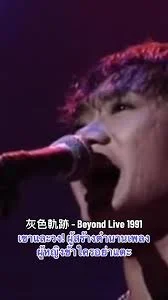
While not denying that the Cantonese Songs have a disproportionate share of the more popular and commercialised love songs, it looks fair to say that Cantonese Songs produced over the last 50 years do have a reasonable diversity and there is a reasonable minority of it being about many other aspects of human lives, including even philosophical reflections on the meaning of live. It is evident that quite a few prominent lyricists for Cantonese songs in the 1970s-1990s are well-educated in Chinese literature and in quite a few Cantonese songs, we do see evidences of borrowed inspirations from the Tang poems and Song Lyrics. At the same time, the Cantonese songs also bear influences from the musical tradition of the west as well as other countries like Japan. And of course, there is Beyond, which is arguably the legendary band in the history of Chinese songs.
We take the view that Hong Kong is arguably the first Adam Smith city in the world and perhaps still the only society where a predominantly Chinese community has been able to have a full open access to the western culture and values; and to find their own ways to assimilate and come to terms with them. As such, how the people in Hong Kong and the wider Hong Kong society react, respond and reflect on the many and varied human conditions they have faced in the past are of relevant and important for the wider humanities. Indeed, how the Hong Kong society has developed and evolved over the years could well illuminate on how the Chinese civilization could adapt to the modern world and how the civilization of the East and the West may integrate in benefit from each others in the time to come.
In any case, we take the view that Cantonese music over the last 50 years or so can be seen as a kind of Hong Kong’s reflections on many of the human conditions commonly faced by the wider Humanities and therefore can be considered a sub-set of the subject matter of how the Humanities have responded to these issues so far.
Herein shall lie one main reasons why we think Hong Kong Music is something that deserves to be preserved and recognized.
VMW of HK Music