The potential effects of a purely personal vision
In the operation of a market system, the importance of expectations for the future cannot be underestimated. We can even say that the modern economy is driven by expectations for the future, and today’s economic phenomena often reflect market expectations for the future.
Author: GUDORDI | 2025-07-25
⋯⋯然而,這就是衡量你們這一代的任務的指標,而這條路確是布滿了許多危險。首先,第一個危險來自認定不可能成功的思維⋯⋯然而,世界上許多偉大的運動──無論是在思想還是行動層面上的──皆是源自純粹一個人。是一位年輕僧侶開啟了新教運動,是一位年輕將軍將帝國從馬其頓擴展到地球的邊界,是一位年輕女士令法國重新奪回領土。
發現新大陸的是一位年輕的意大利探險家,而當傑佛遜宣告『所有人生而平等』時,他只有32歲。阿基米德曾經說過:只需給我一個支點,我就可移動整個世界。 以上這些人都做到改變了整個世界──我們也可以。很少有人具有改變歷史的偉大能力;但我們每一個人都可以改變很多事件的一小部分,而這些行為加起來的總和,就會成為了這一代人的歷史⋯⋯。
……Yet, this is the measure of the task of your generation and the road is strewn with many dangers. First, there is the danger of futility……Yet many of the world’s great movements, of thought and action, have flowed from the work of a single man. A young monk began the Protestant movement, a young general extended an empire from Macedonia to the borders of the earth, and a young woman reclaimed the territory of France.
It was a young Italian explorer who discovered the New World, and 32 year old Thomas Jefferson who proclaimed that all men are created equal. “Give me a place to stand,” said Archimedes, “and I will move the world.” These men moved the world, and so can we. Few will have the greatness to bend history; but each of us can change a small portion of the events, and in the total of these acts will be written the history of this generation……
──羅拔甘迺廸(Robert Kennedy)
開普敦大學演說,1966年6月6日
In the previous article, I mentioned whether the rise of Keynes’ “animal spirits” was a major reason why Shenzhen’s economic performance has been so different from that of Eastern European countries over the past 30 years; and whether the lack of sufficient “animal spirits” is the root cause of the current predicament facing Hong Kong’s economy.
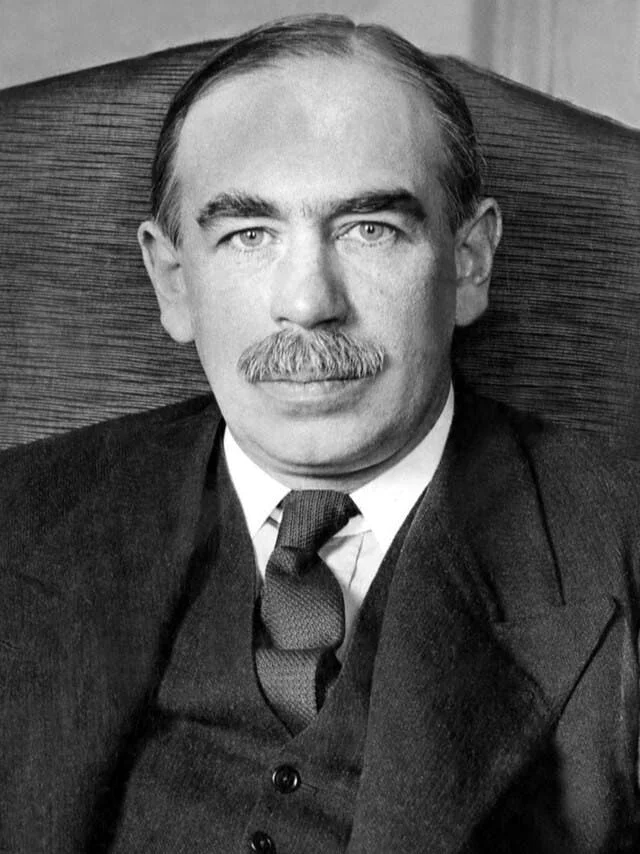
Keynesian economics can be seen as a master economist’s response to socioeconomic changes. (Wikimedia Commons)
The significance of Keynesian economics
This is not a simple question. To truly understand it, one may need a higher level of comprehension of the theoretical framework of economics. It’s worth noting that in the world of classical economics, the future did not occupy a particularly important position. This is not difficult to understand; in the 18th century, the structure of the world economy was relatively simple. Many businesses primarily produced goods that could meet market demand a few months into the future. Generally, businesses did not need to assess the market environment five or ten years from now, nor did they need to spend time and money researching variables that might revolutionize the future industry.
From this perspective, we might say that as the real economy of humankind continues to evolve and the importance of the future continues to increase, by the end of the 19th century, a new paradigm had emerged, and Keynes’s economics can be seen as a master economist’s response to socio-economic changes.
In this context, one of Keynes’s greatest contributions to the framework of economic theory may be highlighting the importance of the future or expectations of the future, and consequently, the importance of money, which can be understood as a bridge between the present and the future. More importantly, if we explore this perspective, we will find that when most economic activity is expressed through money, the phenomenon Keynes called “money illusion” arises, and when pessimism pervades the market, a vicious cycle may form and deepen.
In such exceptional circumstances, the government’s decisive intervention and massive investment to revitalize the animal spirits of businesses and break and reverse the vicious cycle in the market seems logical and necessary. From this perspective, Keynes’ greatest contribution to the framework of economic theory may lie in pointing out the subtle and complex relationships between the future, money, businesses, and markets, and the need for special methods to handle special situations.
The modern economy is driven by future expectations.
However, Keynes was a pragmatic and worldly man. His focus was primarily on solving the pressing economic problems of the time, rather than improving economic theory. On this issue, the most important theoretical foundation likely came from another economic master, Irving Fisher. In his monumental work, * The Theory of Interest*, published in 1930 , Fisher put forward a profound and original viewpoint: the value of all assets today reflects the market’s discounting of all future income from those assets; therefore, today and the future are inseparable, and the most important variable in discounting the future is the interest rate.
Therefore, the importance of future expectations in the operation of a market system should not be underestimated. We can even say that the modern economy is driven by future expectations, and today’s economic phenomena often reflect market expectations for the future.
Is it necessary for the government to propose a vision and guidelines?
This raises another question: what are the main determining factors in our expectations for the future? Is it necessary for the government to provide a vision and guidance? How effective can a single person’s vision be? These are all profound questions. Following Robert Kennedy’s viewpoint cited at the beginning of this article, the power of an individual should not be underestimated. In the next installment, I will delve deeper into this issue using the case of Musk founding the American Party.