The Path-Dependent Nature of Market Forces

Author: GUDORDI | 2026-03-23

道生一,一生二,二生三,三生萬物。
《道德經》,老子
In the previous articles, the author has mentioned that Adam Smith did not provide a systematic discourse on the nature of market forces or how to maximize their potential, and I hoped to introduce some supplementary insights on this subject matter here. In addition to the Austrian School’s perspective on how society utilizes knowledge, the author previously highlighted several characteristics of market forces. This time, I intend to further introduce another intrinsic nature of market forces and to illustrate through the experience of Hong Kong: Path Dependence.
The Interaction Between Water Flows Can Create Immense Benefits
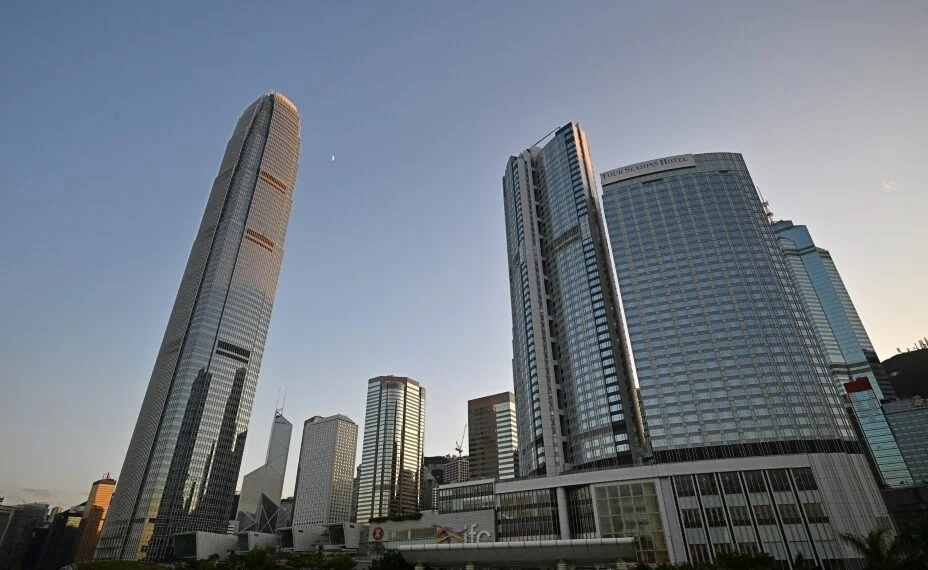
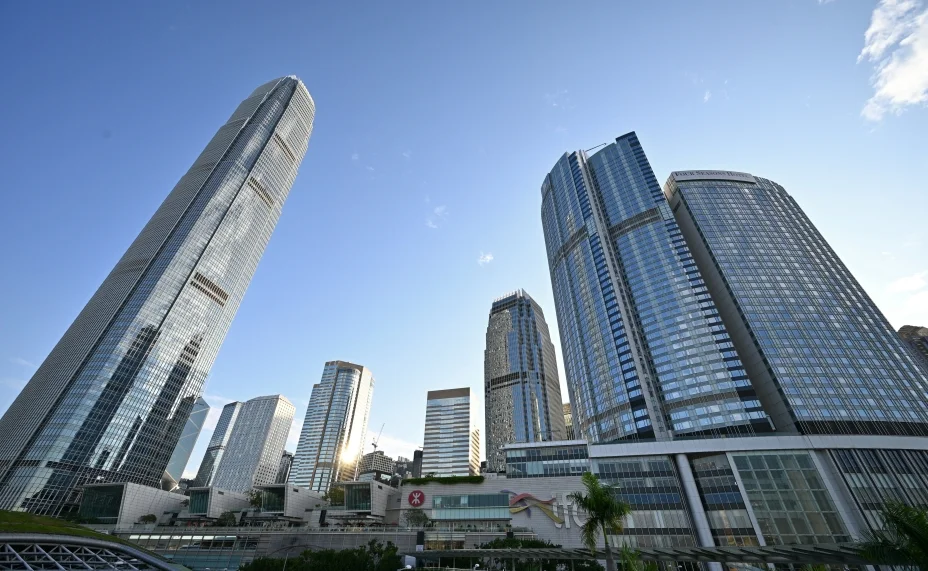
The author previously pointed out that the nature of market forces is akin to water and rivers. When water of different scales and qualities converges, their interaction can create immense benefits; therefore, the formation process and path of each river are critically important. Since the 1980s, many foreign companies have established branch offices in Hong Kong to manage their Asian operations. As Hong Kong evolved from an industrial production base into a management and control center for manufacturing, the city also began to nurture successive generations of professionals in fields such as banking, finance, accounting, law, logistics, and management.
Equally important is that as Hong Kong’s service industry continued to expand, office buildings and commercial supporting facilities became a vital part of its economic infrastructure—in principle, no different from piers or power plants or manufacturing facilities. To date, after accounting for industrial buildings used as office space, Hong Kong’s total office floor area exceeds 150 million square feet. While a gap remains compared to New York, London, Tokyo, or Paris, it already surpasses most cities in Asia and the world. This indicates that Hong Kong is following the path of a global metropolis, a trajectory quite different from many other cities.
Hong Kong’s Business Ecosystem: Greater Depth and Breadth Than Singapore’s
Undoubtedly, in terms of pure Grade-A office space, Singapore’s inventory may not necessarily be less than Hong Kong’s. However, in districts like Kwun Tong, Cheung Sha Wan, Yau Tsim Mong, Causeway Bay, Wan Chai, and North Point, there are countless office users occupying spaces ranging from 200 or 300 square feet to 10,000 or 20,000 square feet in both new and old buildings. From this perspective, the depth and breadth of Hong Kong’s business ecosystem are superior to Singapore’s.
It is also noteworthy that while Hong Kong’s industry has gradually declined, this has not led to large-scale vacancies in industrial buildings. Currently, many industrial buildings are hosting all forms of non-factory commercial activities, demonstrating that many market participants are constantly adapting and seeking new directions. Crucially, regardless of whether they ultimately succeed or fail, they have at least made the effort. This kind of vitality is perhaps one of the characteristics of the ‘entrepreneurial spirit’ that Lee Kuan Yew once referred to.
High-tech揩嘢 Low-tech撈嘢?
Some critics point out that Hong Kong’s industrial sector has failed to produce world-class manufacturing giants like TSMC or Samsung. This is a fact, but should we negate Hong Kong’s industrial standing because of it? As I understand it, in several light industry sectors, the global significance and status of Hong Kong manufacturers are not low. It is also worth noting that many Hong Kong industrialists have long since dispersed their production facilities across the globe, and their imports and exports do not necessarily pass through the ports of Hong Kong or Southern China.
On a technical and legal level, they may not be classified as Hong Kong companies, but the ‘brains’ and backbone of these enterprises remain in Hong Kong. When evaluating the overall strength of Hong Kong’s industry, how should we view these companies? Furthermore, can a portion of China’s manufacturing prowess be attributed to Hong Kong?
Regarding Hong Kong’s industrial development, there was once a saying in the trade: ‘High-tech spells trouble; Low-tech brings the gold.’ While TSMC’s world-renowned success is undeniable, it also endured difficult periods requiring continuous, massive capital injections. Business history is full of ambitious grand designs that ultimately failed. Hong Kong manufacturers focusing on lower-risk areas where they hold a comparative advantage—such as flexible market adaptation and management control—is not necessarily a bad thing; it can also be understood as the path chosen by market participants themselves.
When evaluating a region’s industrial strength, should we not include other segments in the entire industry chain, such as branding, logistics, management, and marketing, in addition to production? Can the benefits brought by foreign institutions setting up in Hong Kong—directly or indirectly hiring local professionals due to orders placed with Hong Kong factories—be counted as a contribution of Hong Kong’s industry? If an employee of a foreign company, after managing a Hong Kong firm for several years, strikes out on their own to establish a company that manufactures and promotes improved products, does that not count as another form of contribution?
The Path-Dependent Characteristic of Market Forces
This also reflects another characteristic of market forces: the development of different markets often show that each has its own unique historical background and specific circumstances. In essence, this is a phenomenon of ‘path dependence’ as defined in the social sciences. Different rivers often have their own development paths, much like how children each have their own personalities and experiences; we cannot simply say a child ‘should’ be a certain way just because we see what his or her other classmates are doing.
Allowing a child to develop naturally, deepening their roots and spreading their branches according to their own character and various encounters, often leads to better and more robust results—especially since the development of all things is often a matter of timing. Take Hong Kong’s journey to becoming an international financial center as an example: if the central government had implemented the policy of making Hong Kong the primary listing destination for State-Owned Enterprises (SOEs) before China Mobile went public, the ultimate outcome might have been quite different. I will discuss this further.