我們對於晚餐的期待,並不是來自於屠夫、釀酒或麵包師的仁慈,而是因為相信他們也會考慮和關注自身的利益。 It is not from benevolence of the butcher, the brewer, or the baker that we expect our dinner, but from their regard to their self-interest.”
──亞當·史密斯(Adam Smith)
In the previous article, the writer has mentioned that one of Adam Smith’s most important insights was that social relationships are not necessarily a zero-sum game; through a free market, ordinary people can create a legend together. Although the primary force driving the free market may only be the pursuit of individual desires—perhaps without any intention of benefiting others—the unintended consequences of the collective actions by a sufficient critical mass of people can benefit everyone in society to an extent far beyond anyone’s imagination.
The pursuit of self-interest doesn’t contradict the pursuit of public virtue.
In the European moral philosophy tradition, the pursuit of private interests had long been described as “private vices”—wrongful or ignoble behaviors. However, in fact, they may even be essential elements in creating “public virtues.” Against this background, it is understandable why when Smith first proposed at the Royal Society in London in 1748 (at the age of 25) that “the pursuit of personal interest could be a major force unconsciously driving the improvement of social welfare,” he was condemned by many and seen as a heretic. Yet, Smith’s revolutionary perspective held epoch-making significance in human history.
Undoubtedly, the sentence quoted from The Wealth of Nations at the beginning of this article has long been widely circulated and cited, bringing about important changes to human civilization. This was a paradigm shift in human thought that effectively unleashed the power of the individual. That said, it was unfortunate that, while Smith had many insights into the nature of market forces and how they function, he did not provide a systematic discourse on the subject.
In retrospect, he devoted much effort to outlining the key components of the entire market system, but he did not write that much about how to maximize the power of these components. It is possible that because he held himself to such high standards, he preferred to leave the research of things he did not fully understand to future generations. This may also be why the full title of his work is An Inquiry into the Nature and Causes of the Wealth of Nations, and why in his later years—despite being financially independent—he still came to work as a customs commissioner (perhaps for the sake of experimenting his own ideas). As a result, the nature of the market and the origin of its power remain, to some extent, an unsolved mystery to this day.
The gentlest and most enduring force in the universe.
The author mentioned last time that the Austrian School’s perspective on how society utilizes knowledge should be one of the important sources of market power. Meanwhile, market power is likely to have other additional sources as well, which I will elaborate on when the opportunity arises.
Overall, regarding the essence of market power, I believe the metaphor of water is most fitting. As Laozi stated in the Tao Te Ching, water is the gentlest force in the universe, yet it seems no other force can surpass it in terms of power. One reason for this, I believe, is the enduring nature of water’s power. Indeed, the cumulative effect over time can be astonishing—a point previously noted by both Warren Buffett and Albert Einstein.
However, the power of water and the market should extend far beyond the influence of temporal accumulation; the “chemical reactions” produced by different currents may have an even more profound impact. There is an old Chinese saying: “The ocean becomes vast and awesome because it admits all rivers.” The power generated by a great river formed by the convergence of small streams is immense. But there could be another source of power for water. What people often overlook, however, is that large rivers often cannot do what small streams can, while small streams do not possess the resources and power of large rivers. Therefore, the greatest power often comes from the combined strength of rivers of all scales. For instance, Microsoft began as a tiny company taking outsourced work from IBM. The fundamental reason it eventually became like a monopoly in personal computer software was that Windows was pre-installed on IBM computers.
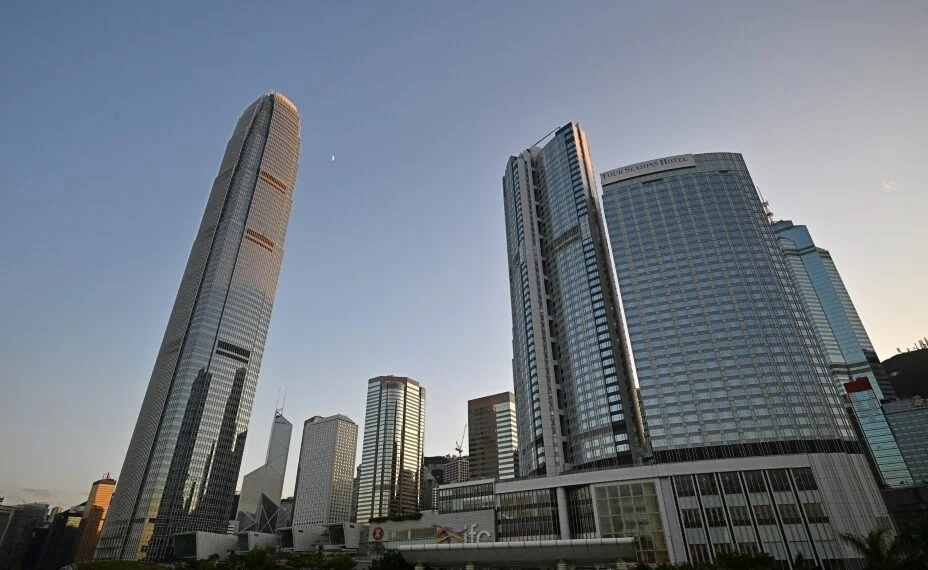
From this, we can see that interactions between companies of different scales can create immense benefits, which has also been the experience of Hong Kong in the past. By many measures, Hong Kong’s market is not actually that unique, but in terms of inclusiveness, it is quite outstanding. There is essentially no protectionist sentiment across many sectors; all are welcome. At the operational level, foreign companies do not face significantly more difficulties than local ones. Consequently, Hong Kong holds many advantages in Asia for attracting foreign companies to come, gradually deepening its role from a pure industrial production site into a management and control center for manufacturing. This also shows that one characteristic of the market is that its various attributes will constantly strive to complement and drive one another over time. This also brings us to the other significance of China Mobile’s listing mentioned earlier, which I will discuss further.