Success is Often Built Step by Step Through Market Forces
Initially, the mainland only intended to treat Hong Kong as a pilot site, starting with Tsingtao Brewery. This was because its brand was widely recognized by the outside world and its market capitalization was relatively small, meaning it didn’t require massive capital to support trading after listing. This mindset likely didn’t begin to shift until after China Mobile’s listing in Hong Kong.

Author: GUDORDI | 2026-03-09
天下莫柔弱於水,而攻堅強者莫之能勝。
──《道德經》,老子
In the previous section, the author mentioned that one of Adam Smith’s most important insights is that relationships between people in a society are not necessarily a zero-sum game; instead, everyone can create a legacy together. However, how to actually activate the “miraculous power” of the market seems to have lacked a systematic discourse, remaining something of a mystery. Having already discussed how society utilizes knowledge, the author intends to delve further into this topic in this installment.
Initial Stages Do Not Require Solving Every Problem
As pointed out last time, activating market forces requires someone to take the first step. However, historical experience shows that we do not necessarily need a grand, sweeping plan; the most important thing is that there are people willing to try, one after another, in continuous succession. While having a detailed blueprint is certainly good, it is not something that can be forced.
The principle of market operation is that a concrete vision does not have to exist before people start working hard. Ideally, no matter how great the difficulties, there are always people trying their best to solve them. It is reassuring that the market does not require every problem to be solved from the outset; solving just one immediate problem creates value, and as more problems are resolved, the ultimate answers often emerge gradually.
Looking back, the embargo caused by the Korean War cast a shadow over Hong Kong’s traditional import and export business. Among those who fled to Hong Kong at that time, some had experience operating textile mills in Shanghai, so they conceived the idea of building textile factories. Following them, refugees from areas like Shantou and Fujian saw the “Shanghai clique” successfully establish these mills and were inspired to start plastic and electronics factories. In this way, Hong Kong’s manufacturing foundation was built step by step, with the service industry developing in its wake. Later, as China adopted the Reform and Opening-up policy, the trend of building factories in the mainland emerged as the times demanded.
The Mainland Gradually Grasped the Benefits of Foreign Capital
It is worth noting that none of this was smooth sailing. Until the late 1980s, public opinion was generally skeptical about building factories in China, citing issues such as corruption and poor infrastructure. While these claims certainly had a degree of logic and factual basis, many Hong Kong and Taiwanese manufacturers had already been engaging with various levels of the mainland government since the early 1980s to address these problems. After years of struggle and effort, the mainland government gradually realized that introducing foreign capital was beneficial to them in the long run. Consequently, those initial concerns were progressively resolved by market forces.
By the time of Deng Xiaoping’s Southern Tour in 1992, people no longer harbored doubts about building factories in China; it was widely viewed as an unstoppable trend. It is important to note that many things that seem simple and direct when read in a textbook are actually built step-by-step through market forces. This is a point we cannot afford to overlook when trying to understand how markets operate.
國內政府逐漸明白,引入外資對他們長遠有利。(Shutterstock)
Market Maturity and Cultivation Take Time
Another characteristic of market operations is that cultivation and maturity take time. If the timing is not right—whether too early or too late—you may not achieve the desired results. In this regard, the best guidance often comes from the market itself. Let me illustrate this by looking at Hong Kong’s journey toward becoming an international financial center and a global metropolis.
Many people may not realize that national policy did not originally designate Hong Kong as the primary listing hub for Chinese enterprises. Although Tsingtao Brewery was listed in Hong Kong as early as 1993, it was not actually a very profitable or large-scale enterprise in China at the time. According to my understanding, the thinking of the mainland regulatory authorities back then was that large state-owned enterprises (SOEs) like Sinopec and China Energy should be listed in New York. They believed only a market of that size would match the scale of these companies, and since the Hong Kong market had historically lacked such mega-SOEs, they feared these listings might be overlooked there.
Initially, the mainland only intended to treat Hong Kong as a pilot site, with Tsingtao Brewery leading the way because its brand was widely recognized internationally and its market capitalization was small, requiring less capital to support trading liquidity after listing. Subsequently, some steel and infrastructure companies listed in Hong Kong one after another, but these appeared to be exploratory in nature. In terms of policy, the approach largely remained aligned with the thinking of the early 1990s.
The Listing of China Mobile Was the Turning Point
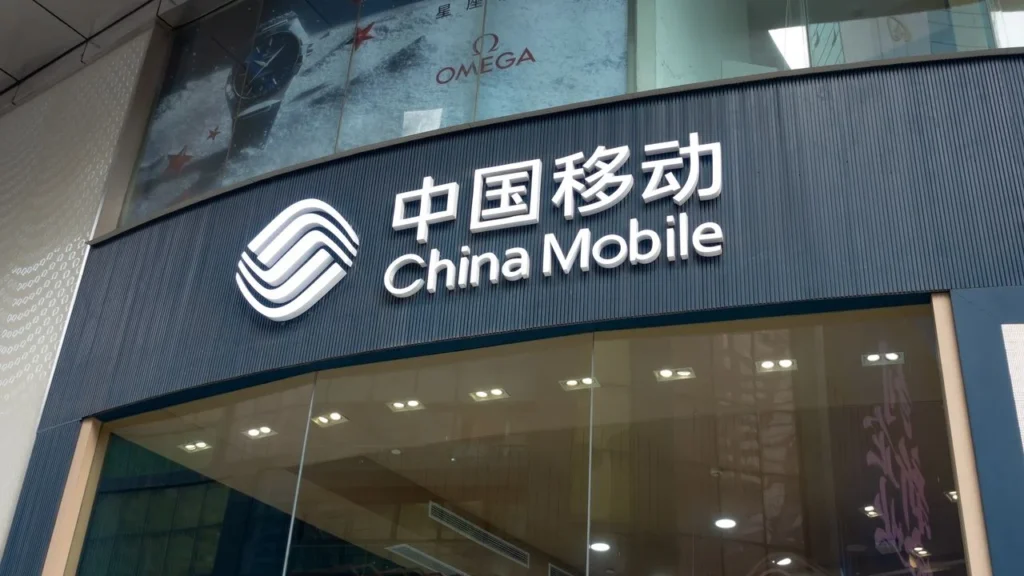
This line of thinking likely didn’t begin to shift until after China Mobile’s listing in Hong Kong. Looking back today, China Mobile’s listing was a major turning point in the development of Hong Kong’s capital market. Although China’s mobile industry is already discussing 6G or even higher standards today, back in the 1990s, China Mobile was still struggling with how to secure financing to upgrade its national network from analog to digital.
As I recall, the advice investment banks gave China Mobile at the time was to split its national operations by province, and then list the provinces with the best overall performance (Guangdong and Zhejiang) first at a reasonable valuation. The hope was to spark market anticipation for China Mobile’s future development and capital injections, as well as the potential for market forces to drive the reform and restructuring of state-owned enterprises (SOEs).
This perspective was later proven to be very well-received by the market. Subsequently, Chinese banks and many industries that actually faced numerous systemic issues adopted this same method—creating market anticipation and vision while preventing localized problematic assets from dragging down the whole. However, the importance of China Mobile’s listing in Hong Kong goes beyond this, which I will discuss further in the next installment.