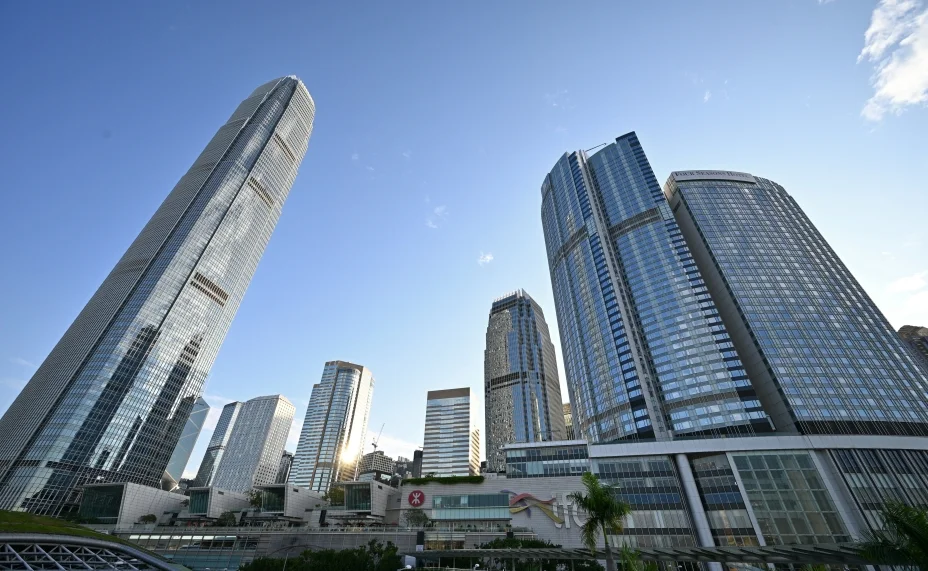
Smith did not express his hopes for the free market.
In his later years, Smith told a friend that he had always wanted to complete a book about human society as a whole, but unfortunately, he was no longer able to. We cannot be certain of the specific content, but based on various speculations, it should be regarded as a continuation of *The Theory of Moral Sentiments* and *The Wealth of Nations*.
Another perspective for understanding Smith's ideas
If so, Smith might have already grasped crucial clues to unlocking the secrets of human social order and prosperity. However, he was also well aware that his views would be considered heretical and unacceptable to society, but at the same time, he had no intention of becoming another Galileo, martyred for the truth. From this perspective, Smith ‘s life can be understood as his cautious attempt , single- handedly, to change millennia of misunderstandings and blind spots in human thought; perhaps this is another angle to understand Smith’s two monumental works, *The Theory of Moral Sentiments* and *The Wealth of Nations*.
In any case, it wouldn’t be an exaggeration to say that Smith’s life revolved around these two books. However, he was a very cautious person, and judging from his two works, Smith wouldn’t say anything too definitive . This leads to a more important question: did Smith ever consider whether a free market could make society better? Based solely on the text , the answer is uncertain . However, in my opinion, Smith at least did consider it, and perhaps quite extensively, only his progress didn’t reach the rigorous level he demanded . This is mainly based on the following three points .
Smith has always considered himself an ethical philosopher
Although Smith is generally considered to have made his greatest achievement in economics, he always identified himself as an ethical philosopher, and his interest in economics may have stemmed from an extension of ethical philosophy into the real world. It is recorded that Smith consistently considered *The Theory of Moral Sentiments* to be a more important work than *The Wealth of Nations* , or that the latter should be seen as a sequel to the former, and that the two masterpieces should be read together.
Regardless, after completing * The Wealth of Nations*, Smith continued to revise *The Theory of Moral Sentiments* , revising it five times throughout his life, demonstrating the importance he placed on this work. In summary, Smith’s concern for the overall well-being of society far outweighed his focus on creating material wealth— Smith lived a very wealthy life, achieving financial freedom at a young age. Some scholars believe that his primary motivation for writing *The Wealth of Nations* was his desire to see a large number of impoverished people in society quickly escape poverty.
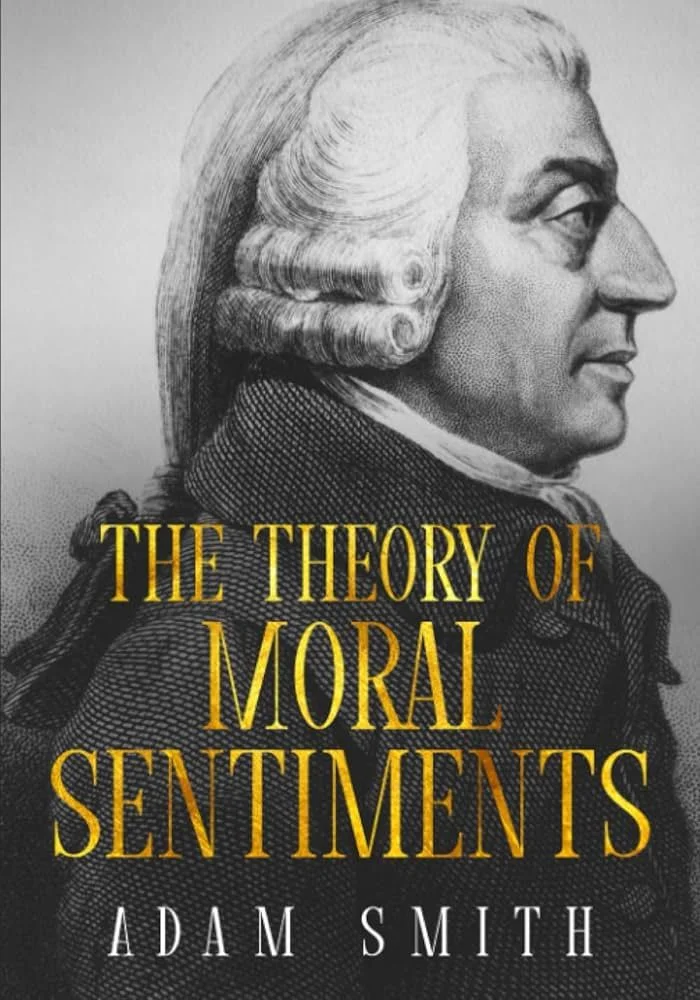
Smith revised *The Theory of Moral Sentiments* five times during his lifetime, demonstrating the importance he placed on this work. (Amazon)
The market in a broad sense is almost everywhere.
On the other hand, Smith’s works touch upon the concept of a “free commercial society.” Chapter 4 of Book I of *The Wealth of Nations* states: “…Every man thus lives by exchanging, or becomes in some measure a merchant…” Clearly, Smith’s concept of market division of labor and transactions is not limited to goods or services; broadly speaking, market institutions exist in almost all social activities involving more than one person.
Here , the concept of a free commercial society is already emerging . Asintellectual historian Jerry Muller points out, Smith’s goal was not merely to make people richer , but to make them better (about making men better, not merely better-off) . This is roughly what Smith refers to as the ” system of natural liberty ” in his revised edition of * The Theory of Moral Sentiments* .
Smith 's Last Wish
In addition, according to records, Smith told a friend in his later years that he had always wanted to complete a work on human society as a whole, but unfortunately he was no longer able to. We cannot be certain of the details of this unfinished work, but based on various considerations, it should be regarded as a continuation of “The Theory of Moral Sentiments” and ” The Wealth of Nations ,” and may involve jurisprudence, history, literature, and even astronomy .
Could Smith’s unfinished work be about deconstructing the entirety of human history and the relationship between humanity and nature, thus offering greater insights into how to make human society better? We have no way of knowing. All we know is that a few days before his death, Smith asked a friend to burn all his unfinished manuscripts. Perhaps this was because he believed that future generations could deduce many of the views he had not expressed by carefully studying his two published masterpieces, rather than having their attention diverted to his manuscripts?
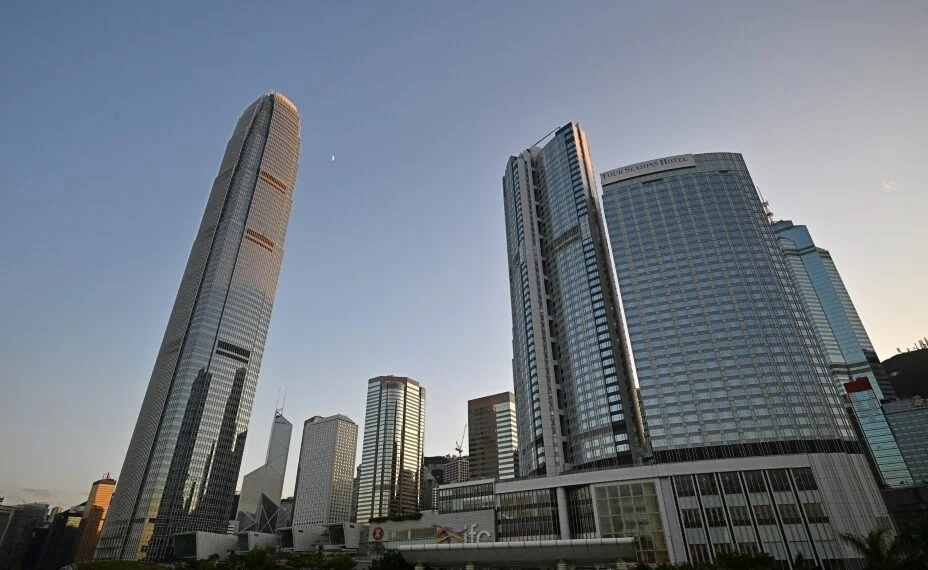
We cannot know for sure, but I can assure you that Smith was convinced that a free market could create immense wealth, and that its benefits extended far beyond that. It’s worth noting that , according to the opening quote , Friedman considered Hong Kong, at the time , the closest place in the world to the free market Smith envisioned . So, is Hong Kong still a free market today? Or does the free market still exist, but we have failed to rekindle its power? We will discuss this further next time.