What is the underlying logic behind Hong Kong’s multiple successful economic transformations?
Hong Kong’s multiple successful economic transformations in the past are a rare and remarkable case. What is the underlying logic behind these successful transformations? We may approach this question through looking at the power of the free market.
Author: GUDORDI | 2026-02-23
理性經濟秩序的問題是相當獨特和難於處理,其特別和困難之處,是在於其解決是必需要建基於一個認知,就是解決有關問題所必需的知識,是從來不會──亦不可能 ──以集中形式存在於某處或是可透過任何方法和形式把它們結合或存放在一起。事實上,有關的知識是只能以分割的形式片面和零碎地存在於很多和無數的獨立個人之中,而且有關的知識往往是不完整,或甚至呈自相矛盾和各不協調⋯⋯
如果我們能彼此同意,社會上的經濟問題的本質, 是主要有關對特定時間和地點的變化作出迅速適應的話,那麼由此推斷,似乎得出的結論只能是要將有關問題解決,我們唯有和必須將最終的決策權交給相對最熟悉有關個別情況的獨立個人⋯⋯
The peculiar character of the problem of a rational economic order is determined precisely by the fact that the knowledge of the circumstances of which we must use never exists in concentrated or integrated form but solely as the dispersed bits of incomplete and frequently contradictory knowledge which all the separate individual possess….
…if we can agree that the economic problem of society is mainly that of rapid adaptation to changes in particular time and place,it would seem to follow that the ultimate decisions must be left to the people who are familiar with these circumstances…
──〈社會是怎樣運作用知識的〉
The Use of Knowledge in Society
海耶克(Friedrich August von Hayek)
1974年諾貝爾經濟學獎得主“Previously, the author has mentioned that the Lion Rock spirit may well be seen as a reflection of the power of market forces. Let us continue this discussion by reflecting on a remark from Lee Kuan Yew. As the author recall, Lee once said something like this: that there was one quality he deeply wished Singapore would be able to cultivate—but ultimately could not—and such quality is entrepreneurial spirit. This statement is worth pondering. In terms of governing Singapore, Lee Kuan Yew’s achievements are clear and obvious. Yet even someone as capable as him seemed somewhat at a loss when it came to fostering a true culture of entrepreneurship.
Are there some things that just cannot be deliberately created?
This raises two important questions. First, do certain phenomena exist in the world whose nature resembles the ‘spontaneous order’ that Hayek often emphasized—phenomena that can just emergenaturally and cannot be deliberately created? This is a profound question. On an individual level, there should not be much disputes. Historically, figures such as Van Gogh, Mozart, and Leonardo da Vinci etc possessed extraordinary talents that seemed to emerge out of nowhere, just bursting out suddenly in certain specific time and place. Their brilliance was so unique that others just could not even imitate, let alone deliberately reproducing another of equal stature. In Hong Kong’s history, similar examples can be found in individuals like Bruce Lee and Wong Ka Kui of Beyond.
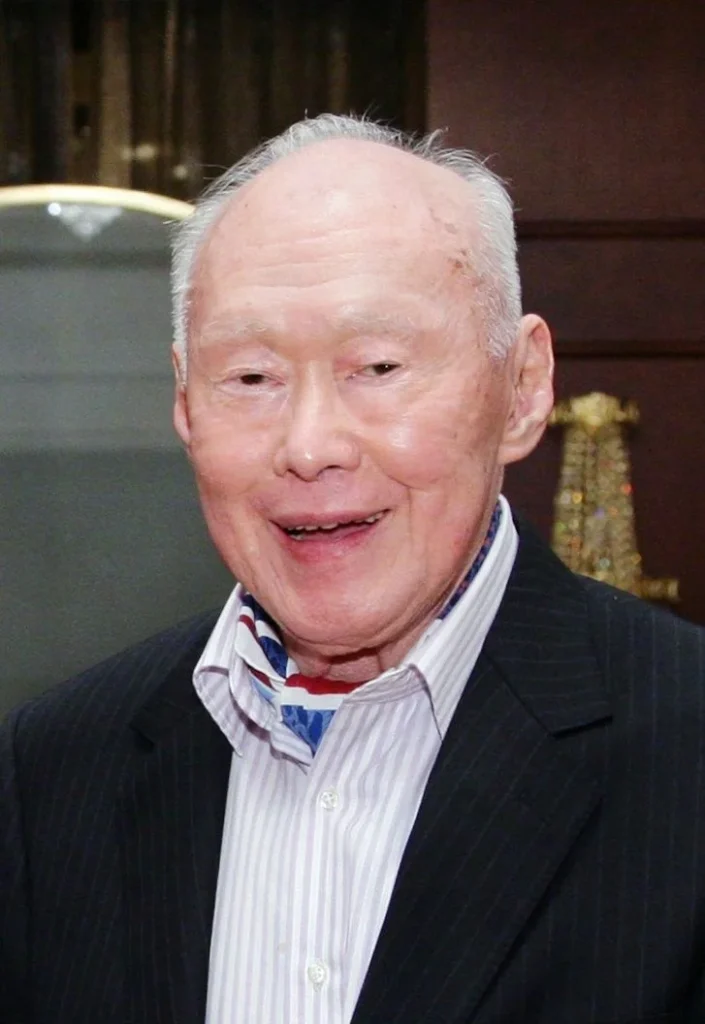
In any case, Lee Kuan Yew’s remarks demonstrate that economic transformation is by no means an easy problem to handle. (Wikimedia Commons)
Economic transformation is inherently challenging.
The second question is why Lee Kuan Yew considered the entrepreneurial spirit so important. Perhaps only he himself could provide a complete answer. My guess is that if Singaporean society had a more widespread culture of entrepreneurship, the responsibilities borne by the Singaporean government would have been lighter—or at least easier to manage.
It is well known that Singapore has always had a government that is both visionary and decisive, constantly planning ahead for the future. Yet even so, the government still faces concerns and uncertainties. Past and present successes alone cannot guarantee the future, especially given the rapidly changing global political and economic landscape. What if the government’s judgments prove wrong?
From this perspective, if more people in society were willing to take on forward-looking and exploratory work, and to assume responsibility for implementation themselves, it could help share some of the government’s burden. It would also provide the government with more practical insight to better assess the future and coordinate the execution of plans. Perhaps this is one of the reasons Lee Kuan Yew hoped to see a stronger entrepreneurial spirit in Singapore.
What enabled Hong Kong’s past economic transformations to succeed?
In any case, Lee Kuan Yew’s remarks highlight that economic transformation is a formidable challenge. Historically, many economic systems have developed around a dominant industry and specific economic models. Once problems arise within these industries or models, such economies often face prolonged periods of difficulty, and despite their best efforts, many ultimately fail to achieve a successful transformation.
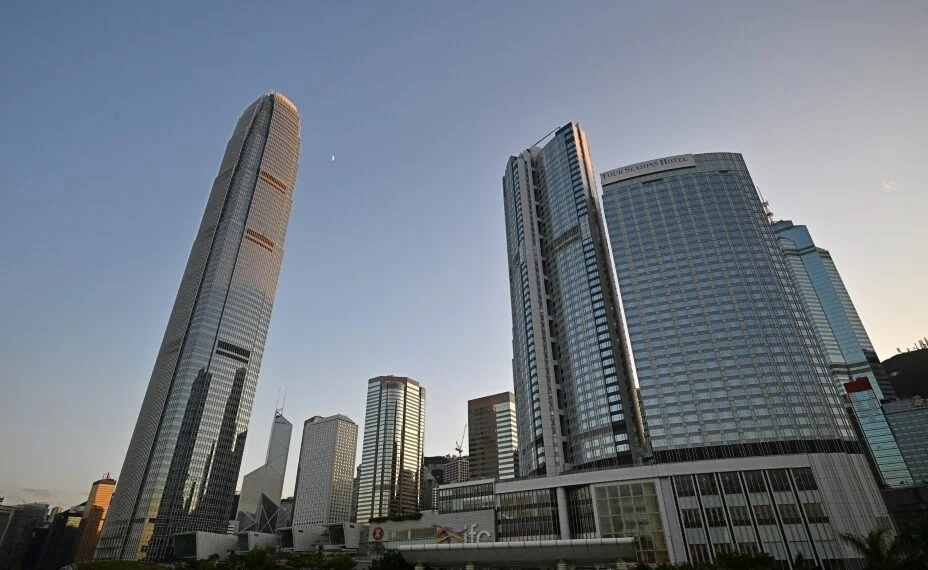
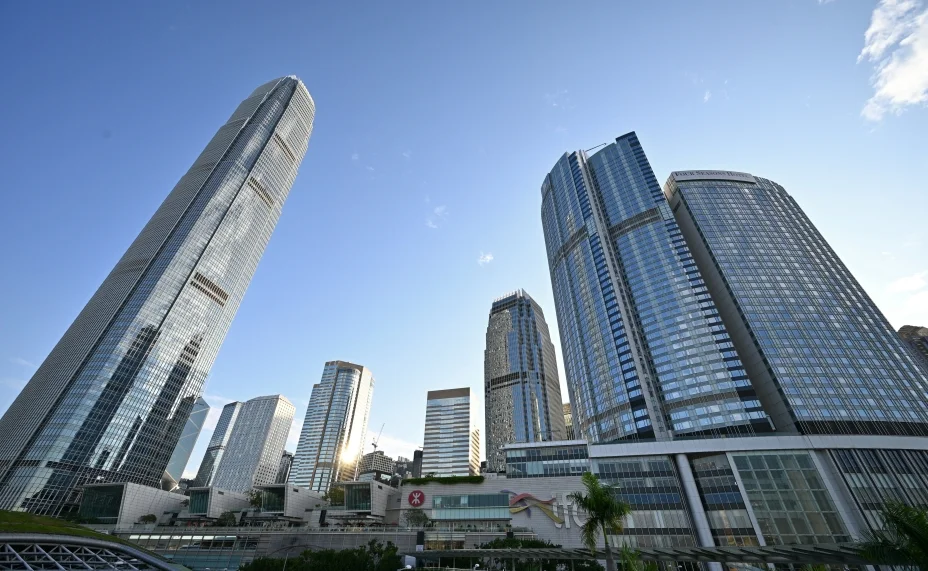
From this perspective, Hong Kong’s multiple successful economic transformations—from a trading port to an industrial hub, then to South China’s manufacturing center, a service-oriented economy, a regional financial and commercial center, and later an international financial and global business hub—represent a rare and remarkable case. What is particularly notable is that these transitions were relatively natural and smooth, largely driven and organized by the participants in Hong Kong’s economic activities themselves, without heavy reliance on government planning or intervention.
This leads to a deeper question: what is the underlying logic behind Hong Kong’s numerous successful economic transformations? The author believes that, in simple terms, one may say that the Hong Kong experience just reflects the power of the free market. And one of the most important sources of this power comes from the insights presented in the groundbreaking paper by Hayek, quoted at the beginning of this article. The author will explore this perspective further in the next article.