What Adam Smith would write about Now?
Most men and events in tend to fade away over time. As such, it is gratifying to discover that even after 300 years, my name still looks relevant and that there has been an event to invite essays on the topic of “What Adam Smith would write about now”. I am therefore delighted to write this article in support of this event.
I think this topic really strikes at the heart of my life-long endeavor which maybe characterized as a passionate attempt made by a “man of letters” to tell his fellow citizens of the world and the posterity an alternative “intellectual structure” to theorize the world as he saw it which was very different from the old mercantilist semi-feudal order which saw the world as largely a zero-sum game. But I think such world-view was misguided and my perspective would represent a much smarter way of looking at the world.
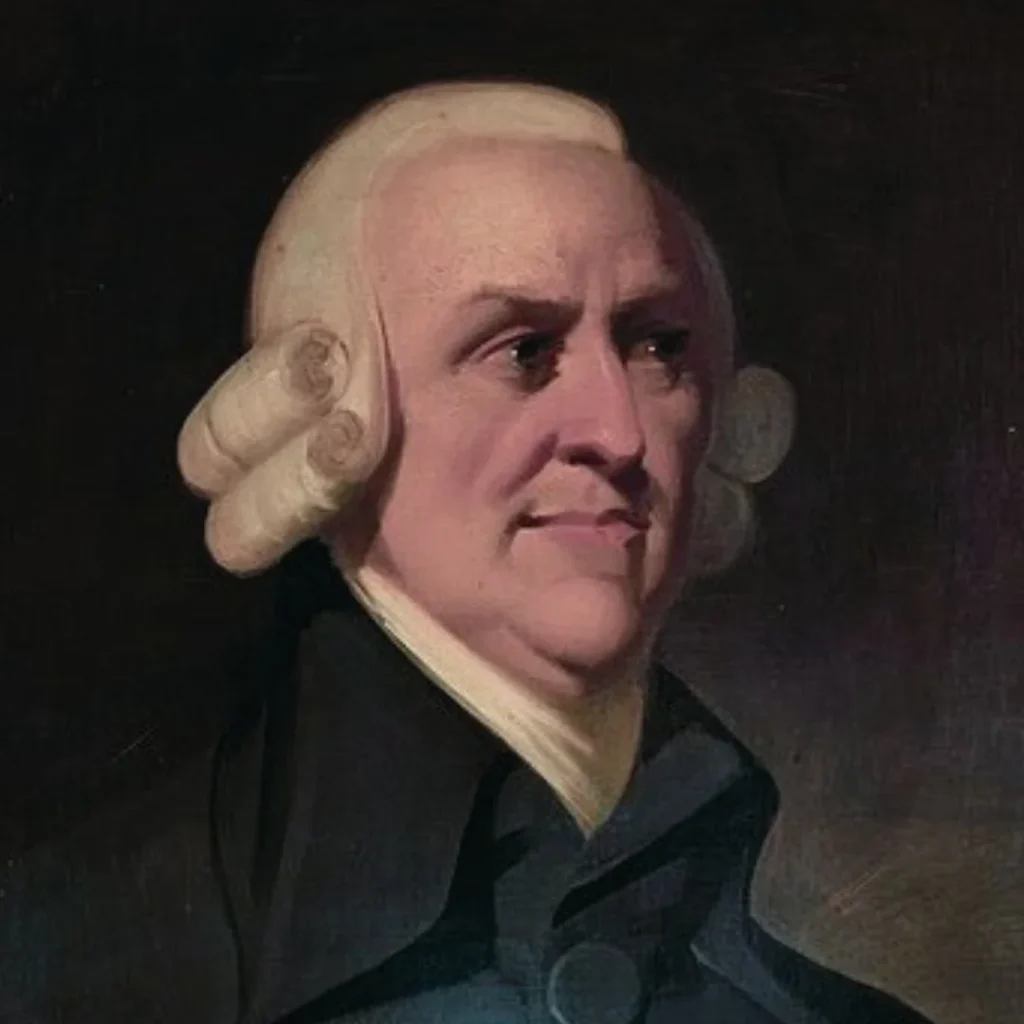
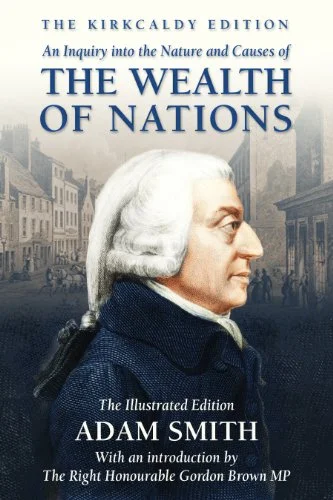
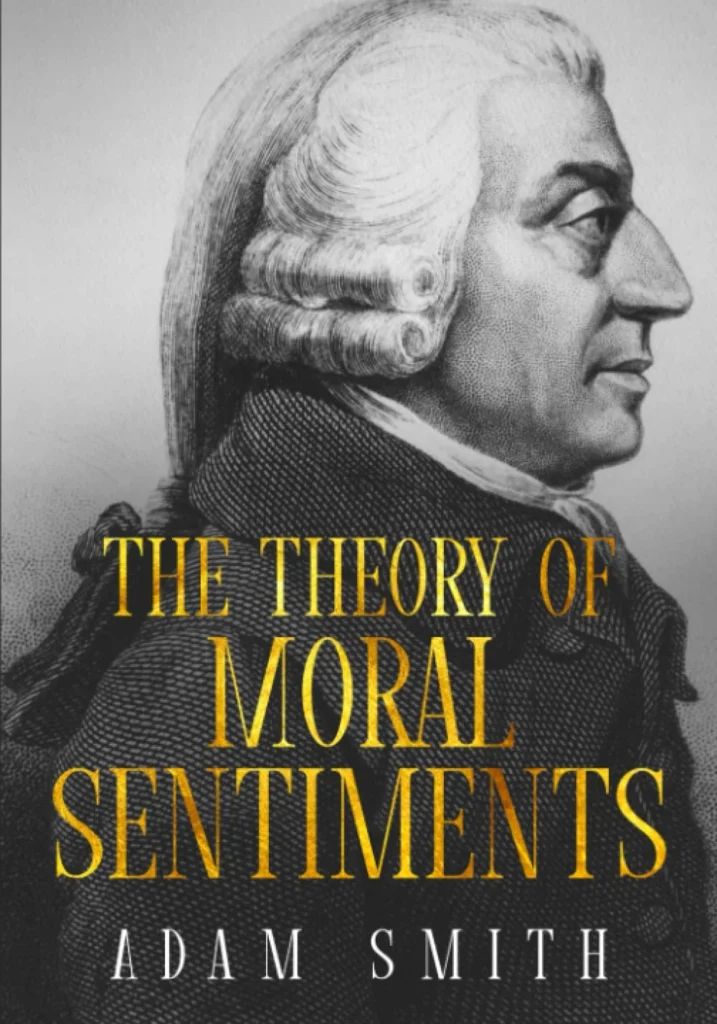
Much in the world has changed and I feel gratified that my ideas seemed to have contributed to that. But now is not the time for complacency. Yes, the wealth that has been created by free markets has been phenomenal, but the proportion that has been used “to lift the poor out of poverty” was much smaller than I would have thought. I am not the apologist for the kind of capitalist system most have in mind which looks quite a misguided and over simplified conception to begin with. I see myself as a moral philosopher first and foremost and I see “An Inquiry into the Nature and Causes of the Wealth of Nations” as really a sequel to “The Theory of Moral Sentiments” and they should be read together as they really represent two dialectic sides of man which is at once a self-interest oriented specie but at the same time, also a social creature capable of virtue.
Society, therefore, is about making the most out of these two forces, but it appears that so far the world has focused mainly on just part of the first side and the subtlety and sophistications underpinning the free market capitalist society seemed to have been neglected.
There are many things I would like to write about now to facilitate the posterity grasping the essence of my thoughts and more importantly, to enrich them to drive the attainment of what I see as entirely possible: that the “invisible hand” in combination of “self-love” and “sympathy” converting “the private interests and passions of men” into a better world for all.
And such world could have all ranks in society reaching “opulence” but still exhibiting “virtues”, with elements of “prudence” to moderate the individuals’ excesses; elements of “justice” to prevent us harming others; and elements of “beneficence” to promote the happiness of others. And such society may well be pursuing all the three components of Happiness as I have highlighted in The Theory of Moral Sentiments: “material provision, social engagement, and the tranquility that comes from acting virtuously”.

Such society may not be really that much inferior to what Plato has conceived but is more attainable and would not require any great leader or designer or “man of system” — what it requires could be “little else” but “peace, easy taxes and a tolerable administration of justice… “ This is why I have called it the “system of natural liberty” and I think the awakening to such possibility constitutes my greatest discovery.
This sounds too good to be true to many, I know. But I have done my best to validate and verify such perspective from all the facts I could gather and all the discussions I have with all the people I have met at Kirkcaldy, Glasgow, Paris, Geneva, London, Edinburgh etc. and all these have reinforced my conviction, which was further substantiated by my observations about the three followings since 1790: the United States; Hong Kong; and the John Whitgift Foundation in the UK.
In retrospect, my fellow Scotsman David Cowperthwaite (Financial Secretary of Hong Kong during 1961-1971) has tried a great political economy experiment in that little former British colony in the East which seemed to have based considerably on my “intellectual structure”. I think the evolution of this city from “a barren island with hardly a house upon it” to an “international financial centre” has vividly illustrated how much the free market could have empowered individuals to achieve, even if they came from only very humble background.
More importantly, my read is that the Hong Kong society is actually socially and culturally more sophisticated than many seem to have thought and it could well become also a city to put into experiment what I have written in the Theory of Moral Sentiments about the power of sympathy and that human being is at once both a self-interest oriented specie but also a social creature capable of virtue. Most importantly, if Cowperthwaite’s experiment can work in Hong Kong, maybe the Hong Kong model could also be successfully applied to many other parts of the world too and as such could well become a model example of how one can use the Free Market to lift the bulk, if not all, of the poor in the world “out of poverty”.

And I think one important lesson one can draw from the case of the John Whitgift Foundation in the UK is that helping to lift the poor in the world out of poverty and other charitable causes could well be just another thing human beings would naturally desire and hence is not really different in kind from any other economic goods. In any case, the John Whitgift Foundation in the UK has been quietly and beneficently helping the Croydon Community for 427 years already; and all these could well be originated from just Mr John Whitgift’s heart-felt sympathy for the people in Croydon, a place where he visited frequently during his life time.
Importantly, if this is the case, then perhaps the demand, exchange and production of charitable products or services could well be not different in kind at all from all other types of economic goods in the commercial society and as such it is conceivable that the Free Market could well be a force which could significantly strengthen the power of Philanthropy in society and lead to a much more prosperous and sustainable development of charitable organisations and charitable activities. And based on my understanding about human nature as expounded in the Theory of Moral Sentiments, it is possible that over time, quite many people would come to discover and agree with the following of what I have written in the Theory of Moral Sentiments:
“Happiness consists in tranquillity and enjoyment. Without tranquillity there can be no enjoyment; and where there is perfect tranquillity there is scarce any thing which is not capable of amusing…”
These are among the reasons for hope for Humanities and I wish they can be understood by more men of actions who can help to turn more I have theorized into reality in the years to come. This constitutes the most important point I want to make at my 300th year of birth. In addition to this point, I would like to share further my thoughts on the following subjects which are actually inter related or even constitute the necessary and important backings to make the point I have mentioned above possible and attainable. Most importantly, taking together, they could possibly bring out the fuller implications of my “intellectual structure”, which I wish would be able to inspire the aspirations of more posterity and men of actions who could help to put them into experiments….
On Economics
I think Economics should not be a discipline about glorifying the market as perfect and omnipotent; my idea was just that it is an amazing force that deserves to be recognized and utilised. I always see myself as a moral philosopher first and foremost and I always see the Theory of Moral Sentiments as a more importantly piece of work and as such I feel somewhat regrettable to find that so far, most people seem to have only partial understanding about “An inquiry into the Nature and Causes of the Wealth of Nations” and that Economics seems to have become a subject for mathematicians. I am being described by many as the Father of Modern Economics, and my view on the nature of Economics remains unchanged.

I continue to hold onto the view that “Political economy, considered as a branch of the science of a statesman or legislator, proposes two distinct objects: f irst, to provide a plentiful revenue or subsistence for the people, or more properly to enable them to provide such a revenue or subsistence for themselves; and secondly, to supply the state or commonwealth with a revenue sufficient for the public services. It proposes to enrich both the people and the sovereign.” It appears to me that Modern Economics has deviated considerably from this path and I think it is really worthwhile for Economics to consider going back to its roots.
On the Free Market
That said, I do think that Economics as an intellectual discipline does have made important progress since my time. I have read with delight Frederick Hayek’s Use of Knowledge in Society and I see profound insights in Armen Alchian’s remark that “what price determines is more important than what determines price”. I am also delighted that Economists have finally recognized that many of the alleged “market failures” are really caused by market forces not being allowed to play out. I think Ronald Coase’s remarks that “clear delimitation of right is an essential prelude to market transactions” and what are transacted in the market are really” bundles of rights” rather than goods are illuminating; so is Steven Cheung’s idea of a “New Institutional Economics” based on the paradigm of property rights and transaction costs. I think that this school of thoughts would help to bring Economics back to its roots.

On Money and Government
Another economic vocabulary which has become much more important now than my time should be money, especially fiat money. I think herein lies one of Keynes’ greatest contribution to economics and I think the popular conception of him as the champion of Government intervention may have over-simplified his thoughts as well as the subtlety and complexities of the political economy situation he was facing with at his time. Indeed, I see considerable insights in Alex Leijonhufvud’s “Keynesian Economics and the Economics of Keynes” and I tend to think that Keynes saw the inter-war period as a special situation which required special ways to handle but this doesn’t mean that he has abandoned the free market. Indeed, the Bretton Wood system would suggest that Keynes did believe in the importance of free trade; and his point could well be just that for the more complex modern economies, we may need the visible hands to play more active roles from time to time.
On the Firm and Modern Enterprises
And this brings us to the nature of the Firm as an economic institution. And it appears important to highlight that if Firm is seen as an economic institution characterized by having visible hands, then modern enterprises and governments are arguably just different types of firms, as Coase would suggest. And I think one main insight of Coase is that the free market can self-create its firms to complement it. As such, Firm/Market Dialetics could well become the paradigm for analyzing the economic process and as such the most important question to ask become not so much whether the Firm has superceded the Market or the Market has superceded its Firm. Instead, it is more about whether the Market and its Firm can form into a Virtuous Cycle so that we can have the firms to complement the market and the market to discipline the development of all kinds of its firms.
Along this line, I am delighted to see that since the Paris Conference in 2015, there seems to be growing expectations in the society about corporate responsibilities in the modern economies which has culminated into the ESG Movement, so to speak. But I think the concept of ESG should be best understood in the context of the Firm/ Market Dialetics and hence I think a proper ESG paradigm should be linked or derived from the Firm/Market Dialetics in Economics. Herein lie an area which deserves more creative thoughts and research efforts and I wish the University could have more to contribute.
On University as a social institution
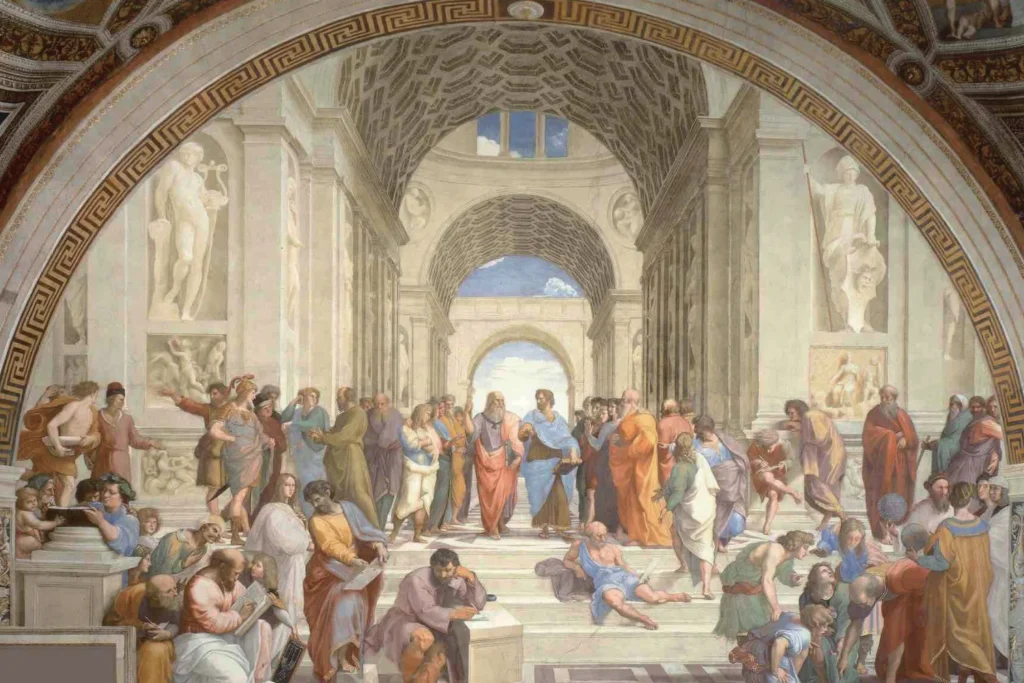
I think when Plato founded the Academy in Athen in 387 BC, his idea was about nurturing just society. I therefore find it regrettable that modern universities are becoming increasingly like vocational institutes and that it looks that nowadays philosophy has become quite a marginalized faculty in nearly all universities in the world.
Keynes has once remarked that “the world is ruled by little else” other than “ideas.” I think the US was founded on the great ideas and great courage of its Founding Fathers, whose conceptions about the US society, with individuals being endowed with “unalienable rights” and being free to the “pursuit of Happiness” in their own ways seemed to f it well into what my intellectual structure would prescribe. I therefore feel sad to see that its young, energetic and visionary 35th President was in office for only 1036 days. For the following words from John F. Kennedy really strikes to my heart: ..“Let us think of education as the means of developing our greatest abilities, because in each of us there is a private hope or dream which, fulfilled, can be translated into benefit for everyone..”
On the Science of Humanities
This also brings us to the last but probably the important subject in the second part of this article, which is about the idea of a Science of Humanities. I think the importance of empirical observations in moral philosophy and the very idea of a Science of Man was first championed by my beloved friend David Hume and I still have vivid memories of his last hour which has left a deep impression on me on what it means for a man to have lived. I hope the posterity can understand more about this and Hume’s great insights on a lot of subjects which I think can shed important light on many things related to humanities and how we should live.

Along this line, I am very impressed by Ludwig Wittgenstein in a variety of ways, not least is the extent of dedication he has put up for philosophical pursuits and his drive to dig so deeply into the question of what life should be all about. Wittgenstein’s last words is “Tell them that I have had a wonderful life” and I am very impressed by his remark that “The work of art is the object seen sub specie aeternitatis; and the good life is the world seen sub specie aeternitatis – this is the connection between ethics and aesthetics.” On the Science of Humanities This also brings us to the last but probably the important subject in the second part of this article, which is about the idea of a Science of Humanities.
I think the importance of empirical observations in moral philosophy and the very idea of a Science of Man was first championed by my beloved friend David Hume and I still have vivid memories of his last hour which has left a deep impression on me on what it means for a man to have lived. I hope the posterity can understand more about this and Hume’s great insights on a lot of subjects which I think can shed important light on many things related to humanities and how we should live.
I think such remark has striked at the heart of the issue related to the nature of Moral Philosophy and the idea of Science of Man that spins out from it. And this also brings us to the last and one of most important idea to be conveyed in this article: one of the most important subject for mankind to study now is that of the Science of Humanities and that this should help to provide the necessary intellectual backing for what I see as the most important point raised in this article. That there can be such an intellectual subject to study; that it can be a holistic discipline like the This-Worldly dimension of Moral Philosophy; that meticulous and all-encompassing empirical observations and audacious theorization about the real world and human nature plus the making the most from the power of the “invisible hand” could help to convert the “private interests and passion of men” into a better world for all. That, perhaps, also lies one of the most important contribution to Humanities from the Scottish Enlightenment, of which I am a part.