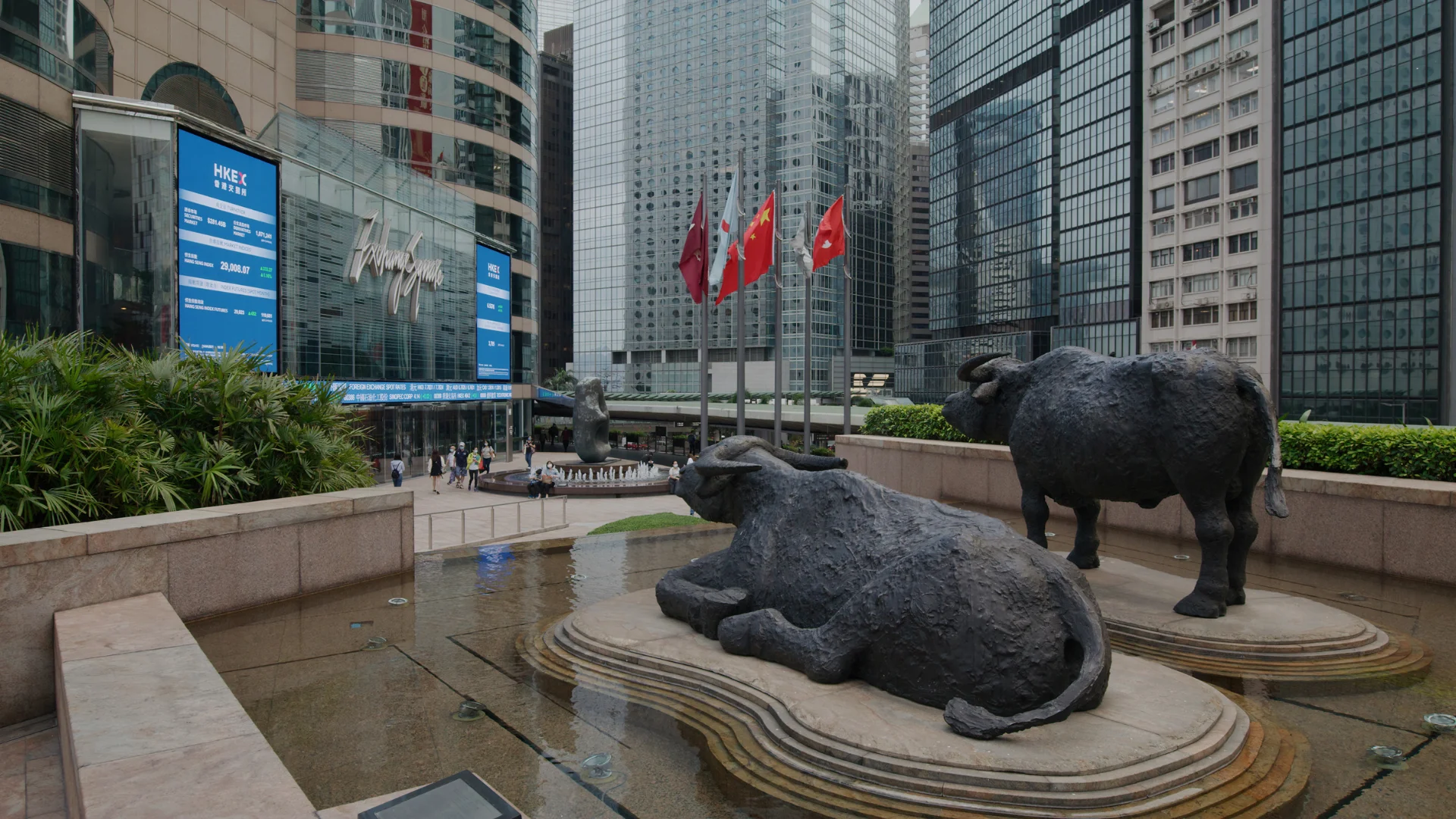
Capital Markets
“Finance is based on Trust….”.
– John Pierpont Morgan 1837-1913
“It is Enterprise which build and improves the world’s possessions.. If Enterprise is afoot, Wealth accumulates whatever may be happening to Thrift; and if Enterprise is asleep, Wealth decays, whatever Thrift may be doing..”. ... “
– John Maynard Keynes
“….Speculators may do no harm as bubbles on a steady stream of enterprise. But the position is serious when enterprise becomes a bubble on a whirlpool of speculation. When the capital development of a country becomes a by-product of the activities of a casino, the job is likely to be ill-done…”
John Maynard Keynes
We see Capital Markets as another key driver for Our Endeavours related to the Betterment of the Humanities.
We believe the greatest importance of the Capital Markets lies in that it plays a very important role in terms of facilitating the creation of Wealth in the modern economies. .
Following the teachings of Adam Smith, we see the Capital Markets as a place where the Seekers of Capital meets the Providers of Capital and there are essentially four main players in this market: Individuals, Companies, Governments as well as non-Government and non-Commercial entities and these four are both Seekers of Capital and Providers of Capital.
As Charlie Munger has said rather explicitly, nowadays the finance industry appears to be working more for the intermediaries so much so that Munger has once commented that the total revenue of all US financial intermediaries in a year roughly equal the total profits of Corporate America, meaning that the annual profits entitled by shareholders of Corporate America has been more or less fully eroded and absorbed by all kinds of fee charged by the financial intermediaries.
Whether or not one holds to Munger’s view, it does not appear to us that the global financial industry is currently working primarily for the interest of the providers of capital. As highlighted in the quotes cited at the beginning of this article, Keynes has already observed the casino-elements in the capital markets and highlighted the potential risk of Casino-Capitalism almost 100 years ago.
We also concur with Keynes that Enterprises constitute one main engine to build wealth in the modern world and we believe that the quality and effectiveness of Capital Markets should be measured by their ability to channel capital to the most productive enterprises in the world.
Importantly, if we examine the current situation of the global capital market from this perspective, we would probably come to the conclusion that the current state of the global capital market still has much to be desired. Globally, there are just about 60,000 publicly listed companies in the world which means that the global equity market currently is serving a very tiny portion of the private companies in the world. Moreover, if we look deeper into the structure of the global equity market in terms of market capitalization and average daily turnover, we will find that the global equity market is really dominated by a few major ones, with the US alone accounting for over 50% of the global equity market turnover and the figure for G7 combined is well over 80%.
This means that the current global equity market is really serving mainly the US companies especially those Star Companies listed in the US. Outside of the US and those of the G7 countries, there are really not that many stock markets and companies that have genuine capital raising capability in the international market. This is also means that for most of the companies in most of the over 100 stock markets in the world, they have been rather neglected in the global equity market. We do not see this as healthy and condusive to the development of enterprises in most of the 193 countries in the world.
For the fixed income, currency and commodities markets, they also exhibit dominance by the US and the G7 countries. We do not see this as condusive to the healthy and balanced development of the global economy and reckon that there are forces set in motion to address these issues somewhat. We aspire to be part of the process and to benefit from the growing recognition of this in the market place.